Dear Ottershaw,
first of all I would like to say that I am really impressed by your approach to the restoration process of your clock. Very good, professional and useful I think for all of us, especially for me having the little twin of your Terrile waiting for a new life and a very small knowledge in clocks restoration.
I am a bit envious because I want to start mine too but it is still in Italy

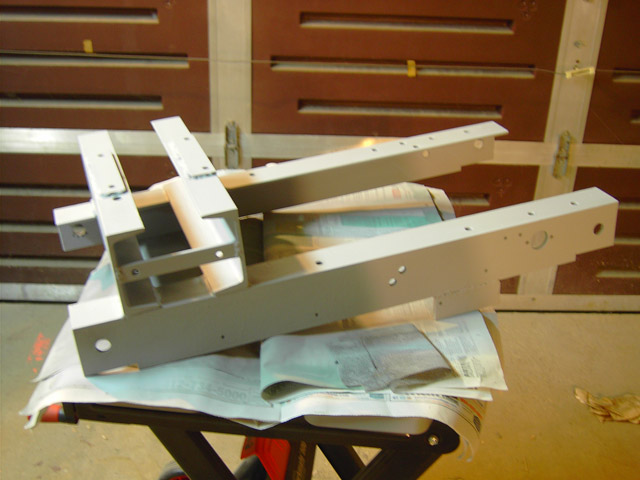
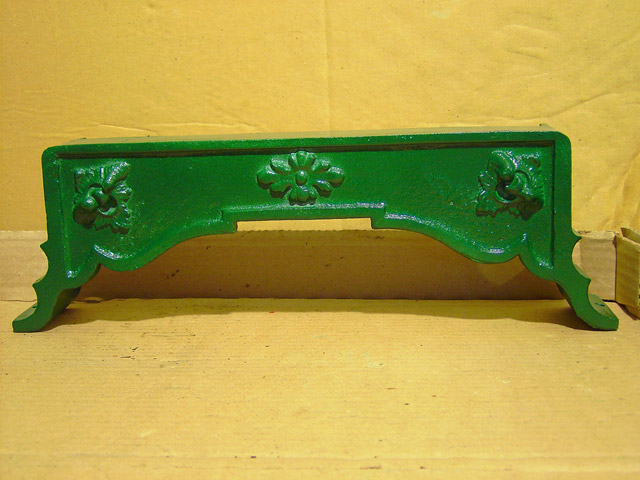
Anyway, I am too late to take part to the question about repainting or not repainting the clock....... My idea was not to do it, but I see that this is almost a common practice (unfortunately in my opinion) in tower clock restorations.
I think this is an ethical problem born by the distinction between conservation and renovation. If a clock is meant to be conserved/preserved/restored it should follow a path that is different from the renovation one.
The repainting of the frame should be in most of the case avoided unless the preservation of the frame itself is put in danger. The same count for the cleaning of the parts...... but this is another story and I will make a separate question about this point.
When removing the paint layer we loose information about the way the clock was produced without need, because the paint is not a structural part or a mechanical part that needs to be changed or modified to make the functioning of the clock possible, but it is a pure preservative/decorative layer. I've rarely seen in museums a restored tower clock having still its original paint applied by the factory, this impress me very much.
The industrial production of this machines was for a large part a work of handcraft even at the beginning of the XX century, so many questions could be answered by just studying an original paint layer.
The first information that is permanently lost by removing a paint layers can be:
1- What colors where used: If a clock is repainted no one can guaranty that the colors and the way they are combined by the restorer are the same used by the factory, personal tastes can play a big role in this.......what about if I want to color my Terrile in Pink or Blue Velvet? Over 50 years do people will think this was the original color?....................... Well I have to say I’ve chosen a bad example because my frame is missed………
2- What kind of color where used: Chemical composition......it would be interesting for example to know what kind of synthetic paints they were using , especially between the 19th and 20th century when many new synthetic products where developed. In this sense a database of the different paints and producing factories could even help in some cases to asses the provenience of a clock.
3- How where they applied: Brushes? Spray? Bath?
4- What kind of bases where used
I am sorry for the small divagation of the discussion but I came too late to take part to it before.
Now……about the cleaning of the parts…… this is what intrigue me the most.
When cleaning a metal there are many different methods that can be used, what is the one you used ?
Some consideration I made about this point in the vision of cleaning the parts of my Terrile:
The treatment should not:
- Remove any layer of the original metal but only the dirt that can compromise the preservation of the metal itself or the functioning of the mechanism.
- Release chemicals on the surface of the metal that can activate chemical reactions in the future resulting in a weakening or an acceleration in the degradation process (oxidation).
- Remove factory features like the scratching lines of hand tools or mechanical tools used during the production phase or previous restorations.
Last consideration: When making this metal shine like they just came out from the factory there is a risk of exposing a new layer of the metal to oxidative gases resulting in a further oxidation. Usually brass tends to form a natural patina that if left in place and just cleaned up create a sort of barrier between the metal and the external environment resulting in a reduced speed in the oxidation.
To make the story short…….in my opinion the solutions can be :
- Not clean the parts up to the point that the metal is exposed (shine)
- If parts are deep cleaned than a preservative should be applied to form a protective layer.
Discussions are opened

See you
Roberto